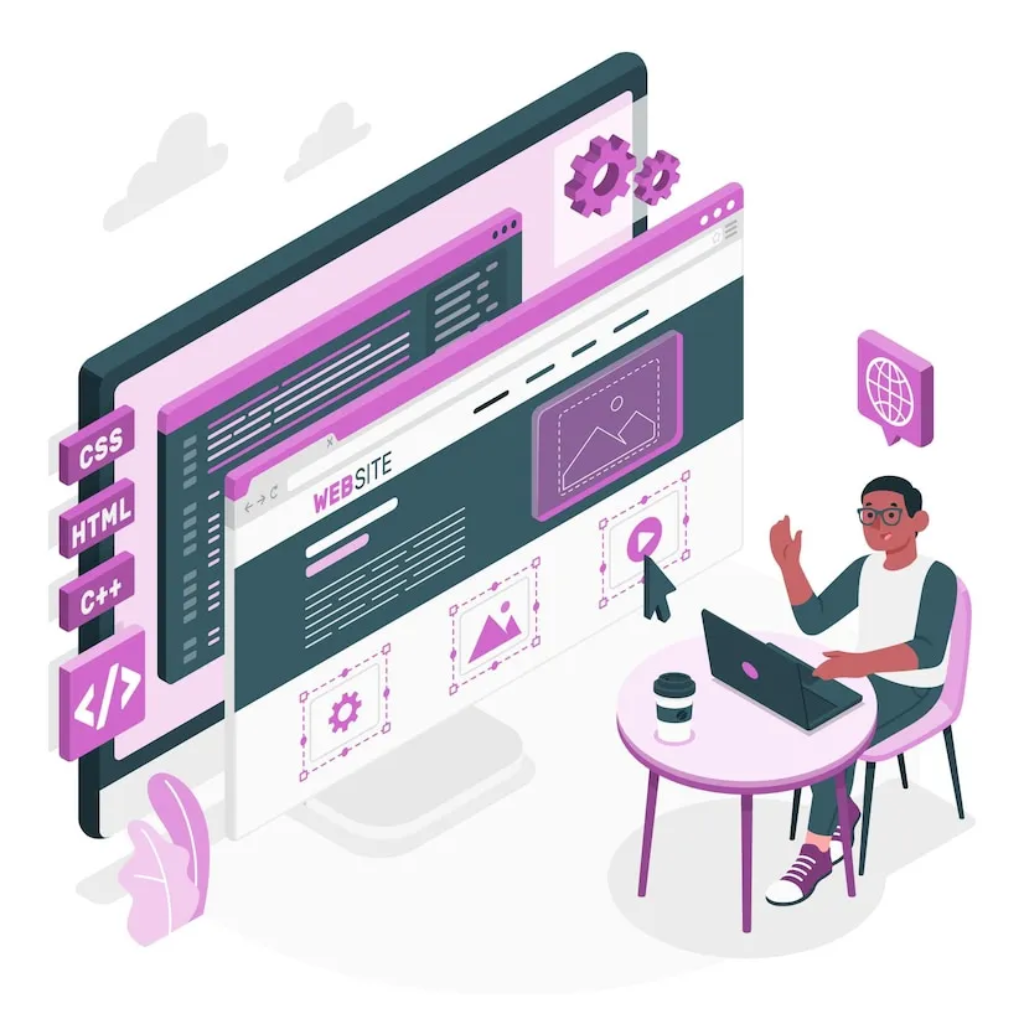
In today’s digital age, having a website isn’t just a luxury—it’s a necessity. Whether you’re running a small business, managing a large corporation, or even just promoting yourself as an individual, a website helps you establish a robust online presence. It serves as a central hub for engagement, branding, and commerce. We’ve seen celebrities and social influencers use websites to expand their reach beyond the confines of social media.
However, when it comes to website building, the terms “web designing” and “web development” are frequently used. While many people use these terms interchangeably, they actually refer to distinct parts of the process. Think of web design as the creative side—it’s all about how a website looks and feels, incorporating elements of UI (User Interface) design. This involves the layout, color schemes, and fonts, making the site attractive and user-friendly.
Whereas, web development focuses on how a website functions, encompassing elements of UX (User Experience) design. This is the technical aspect, involving coding and programming to ensure everything runs smoothly. Developers build the site’s backbone, ensuring it’s fast, secure, and capable of handling all the features that the designer envisioned.
Understanding the difference between web design and web development helps us appreciate the intricate work involved in creating a website. It’s truly a collaborative effort where creativity meets technology, resulting in the engaging and functional websites we interact with daily.
What is Web Designing?
Web designing is all about visual aesthetics and user experience. It involves crafting layouts, choosing color schemes, selecting fonts, and designing graphic elements like logos and images.
Designers use tools such as Adobe Photoshop, Sketch, or Figma to create mockups and prototypes. These visual guides outline how the final website will look before it’s handed over to the developers.
What is Web Development?
Web development, on the other hand, is about technical implementation. It involves writing code (HTML, CSS, JavaScript, etc.) to bring the design to life.
Developers handle tasks such as building web pages, creating interactive features, and ensuring the website is responsive across different devices and screen sizes. While frontend development involves HTML, CSS, and JavaScript to create the user interface, backend development focuses on the server-side aspects.
They set up databases, servers, and other infrastructure to ensure the website operates smoothly. This collaboration ensures that both the visual design and technical functionality work seamlessly together.
Relationship Between Web Designing and Development
Despite being distinct disciplines, web designing and development are closely intertwined. A successful website requires seamless collaboration between designers and developers. For example, a web designer might create a mockup with specific colors, fonts, and imagery, focusing on UI design to enhance user interaction.
The web developer would then use HTML and CSS to code the design, ensuring it displays correctly across web browsers and is responsive on mobile devices, while also considering UX design principles to optimize user experience. The developer might add interactive elements like buttons or forms using JavaScript to further enhance the user experience.
Unique Tricks and Tips
Having covered the basics, let’s look at some unique tips and tricks to help you improve your web creation process:
- Use Responsive Design: With more users accessing websites on mobile devices, responsive design is for mobile devices is crucial. This involves designing a site that adapts to various screen sizes, ensuring a seamless user experience.
- Prioritize User Experience: The success of a website hinges on its user experience. Ensure your site is easy to navigate, loads quickly, and is visually appealing. Think about the last frustrating website you visited—was it slow or hard to navigate? Aim to avoid those pitfalls.
- Leverage the Power of Storytelling: Storytelling can be a powerful tool to engage users. Use compelling narratives, images, and videos to bring your website to life. For example, adding a “behind-the-scenes” video to your site can significantly boost user engagement.
- Optimize for SEO: Search Engine Optimization (SEO) is critical for ranking high in search engine results. Use keywords strategically, optimize images, and ensure fast loading times.
- Use Interactive Elements: Interactive elements like animations, scrolling effects, and hover states can enhance the user experience and make your site more engaging. Just remember not to overdo it; sometimes, subtlety is key.
- Keep it Simple and Consistent: A simple, consistent design is easier to navigate and understand. Avoid clutter, use clear typography, and maintain a consistent color scheme.
- Use High-Quality Images: High-quality photos can improve your site’s visual appeal while also effectively communicating your content.
- Make it Accessible: Ensure your website is accessible to all users, including those with disabilities. Follow web accessibility guidelines and use semantic HTML. It’s not just about compliance; it’s about inclusivity.
- Use Web Performance Optimization Techniques: Techniques such as caching, minification, and compression can improve your site’s loading times and overall performance. We found these methods invaluable when optimizing an e-commerce site with a large inventory.
- Stay Up-to-Date with the Latest Trends: The web design and development landscape is constantly evolving. Stay current with the latest trends, technologies, and best practices to keep your website competitive. Regularly read industry blogs and attend webinars to stay informed.
Conclusion
As you venture on your journey into the world of web designing and development, remember that mastering these fundamentals is just the beginning. With dedication, practice, and a keen eye for innovation, you’ll be able to create stunning websites that engage audiences and drive results.
Whether you’re a seasoned professional or a beginner in the field, never underestimate the power of continuous learning and adaptation. Embrace challenges as opportunities for growth, and don’t be afraid to push the boundaries of creativity.
By staying informed, embracing collaboration, and honing your skills, you’ll be well-equipped to navigate the ever-evolving landscape of web design and development with confidence and success.
Regularly analyze data, user behavior, and trends to make improvements that drive better results. Something as simple as changing the color or copy of a button can dramatically affect conversion.
Your journey into web design and development is a continuous process of exploration and discovery. Celebrate every milestone, and don’t be afraid to experiment with bold ideas. Every website you create is a testament to your skills, vision, and dedication. Approach each project with passion, integrity, and a commitment to excellence.
We’re also proud to be featured on Canada Digital Marketing network, which underscores our commitment to providing top-notch services and staying at the forefront of industry trends. Approach each project with passion, integrity, and a commitment to excellence. Learn more about our services.